The Bridge (1962)
a town remembers. a man keeps moving
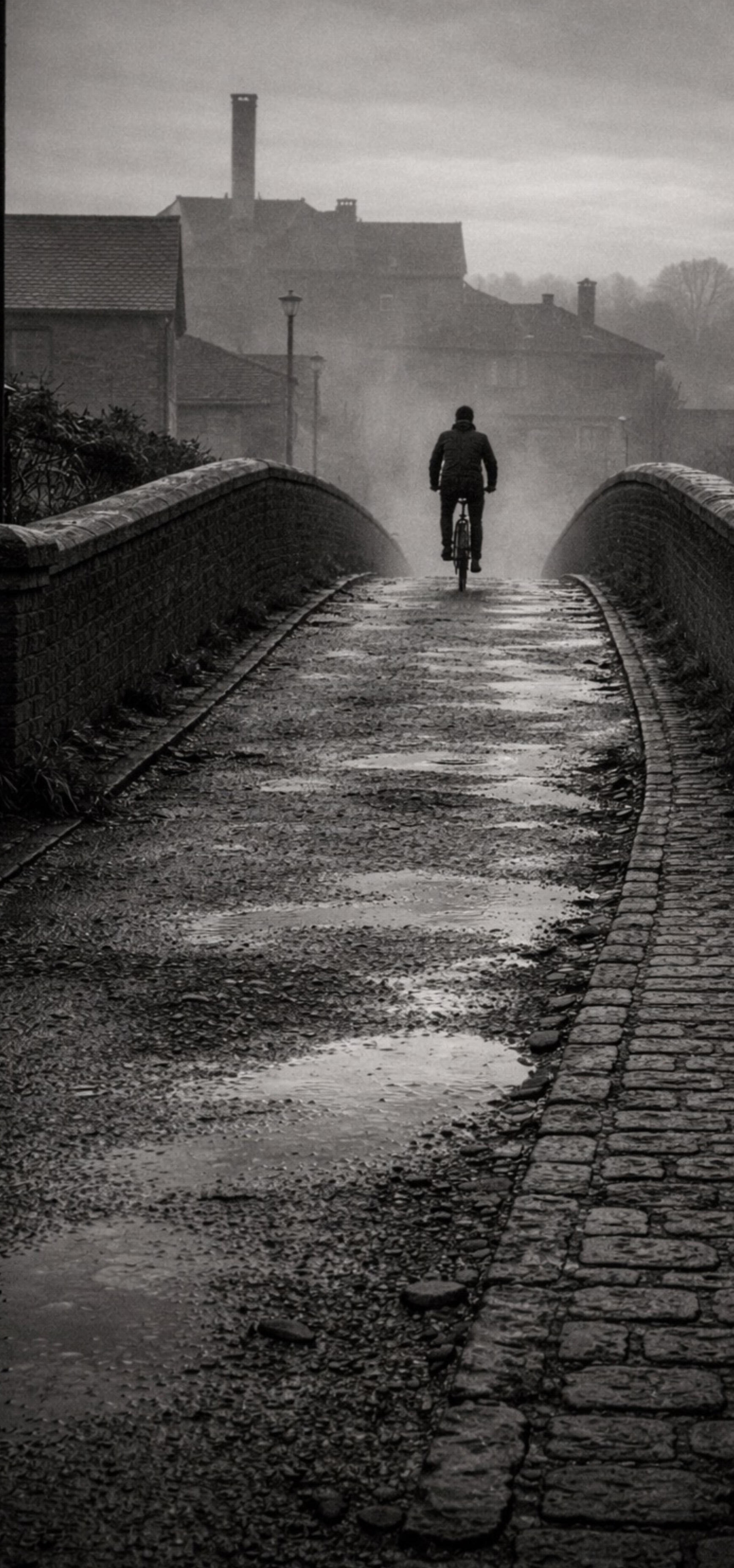
Released in late 1962, The Bridge is generally regarded as both the critical high point of Crimea Street Films and the production most responsible for the studio’s brief national attention during the early 1960s.Directed by Peter Hall and produced under the close supervision of founder Alistair Dunmore, the film followed a solitary mill worker making repeated bicycle journeys across an unnamed northern town following the quiet collapse of his marriage. Characteristically for Crimea Street Films, narrative events were minimal. Much of the film instead focused on routine, weather, silence and the emotional weight of ordinary environments.Shot almost entirely on location during one of the wettest Lancashire winters on record, production was reportedly difficult throughout. Several cast members later recalled long overnight shoots in freezing conditions, while cinematographer W. H. Mitchell became known for insisting on filming immediately after rainfall to achieve the reflective surfaces now closely associated with the film’s visual style.Upon release, The Bridge divided critics sharply. Some praised its atmosphere and restraint, while others questioned whether audiences would tolerate its bleakness and unusually slow pacing. One reviewer famously remarked that:“The protagonist cycles for what feels like three consecutive winters.”Commercially, the film performed modestly at best, with several regional cinemas reportedly shortening its initial run due to poor attendance. Yet critical opinion gradually shifted following its screening at the 1962 British New Wave Film Festival, where it received a Special Jury Award for Cinematography.
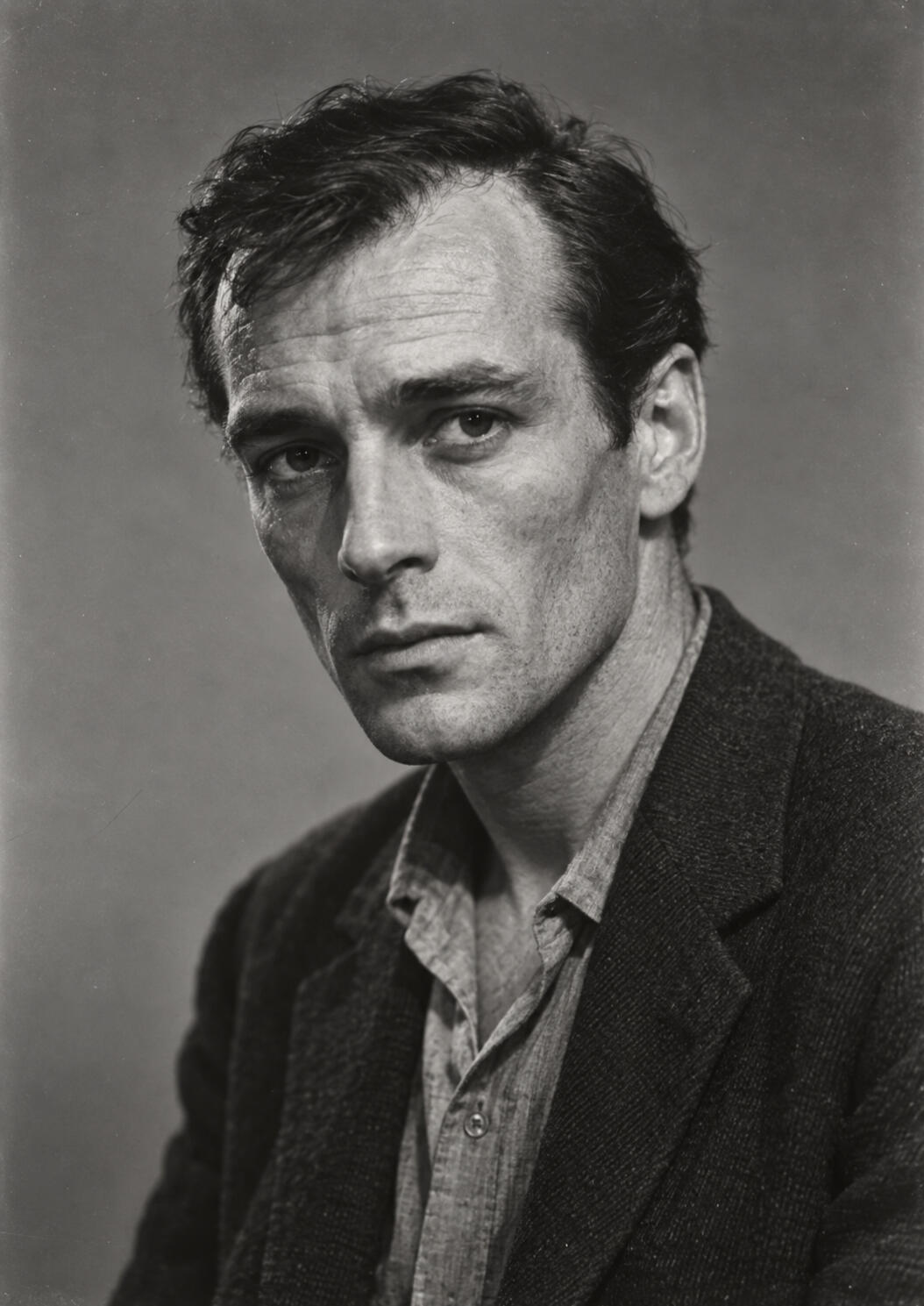
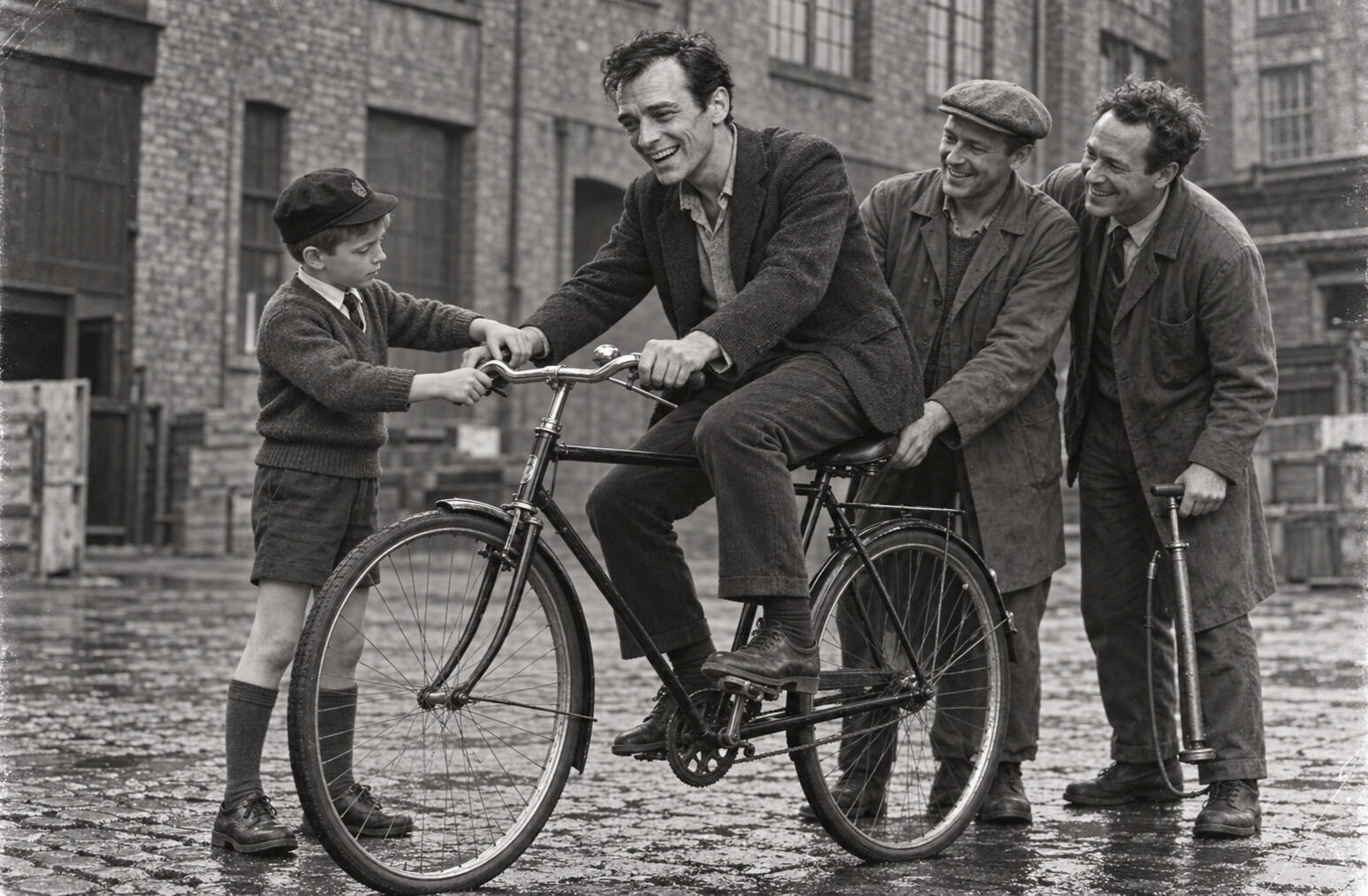
Jack Rowan (1927–2001)Jack Rowan was 35 when he took the leading role in The Bridge. Born in Oldham, the son of a loom overlooker, he left school at fifteen and worked briefly in a cotton mill before completing his National Service. He became involved with amateur theatre during the early 1950s and later joined a repertory company in Stockport, where his lean appearance and unusually quiet delivery brought him a succession of roles as labourers, returning servicemen and troubled husbands.In The Bridge, Rowan played Tom Lomax, a mill worker continuing the routines of work and home after the collapse of his marriage. With relatively little dialogue, much of the performance depended upon posture, expression and the changing rhythm of his bicycle journeys across the town. Rowan’s refusal to make the character openly sympathetic was considered central to the film’s restraint.The role brought him wider recognition, although he remained principally a television and theatre actor. During the 1960s and 1970s he appeared regularly in police dramas, social realist plays and northern television productions, usually playing men whose lives had become more complicated than they were prepared to admit.Despite spending much of The Bridge on a bicycle, Rowan had never learned to ride before accepting the role. He reportedly concealed this from the producers until three weeks before filming began and then practised each morning in an empty mill yard. Crew members later claimed that several of the film’s longest and most melancholy shots were created simply because nobody trusted him to turn around.Rowan retired from acting in 1988 and moved to North Wales with his wife, Margaret. He died in 2001, aged 74.
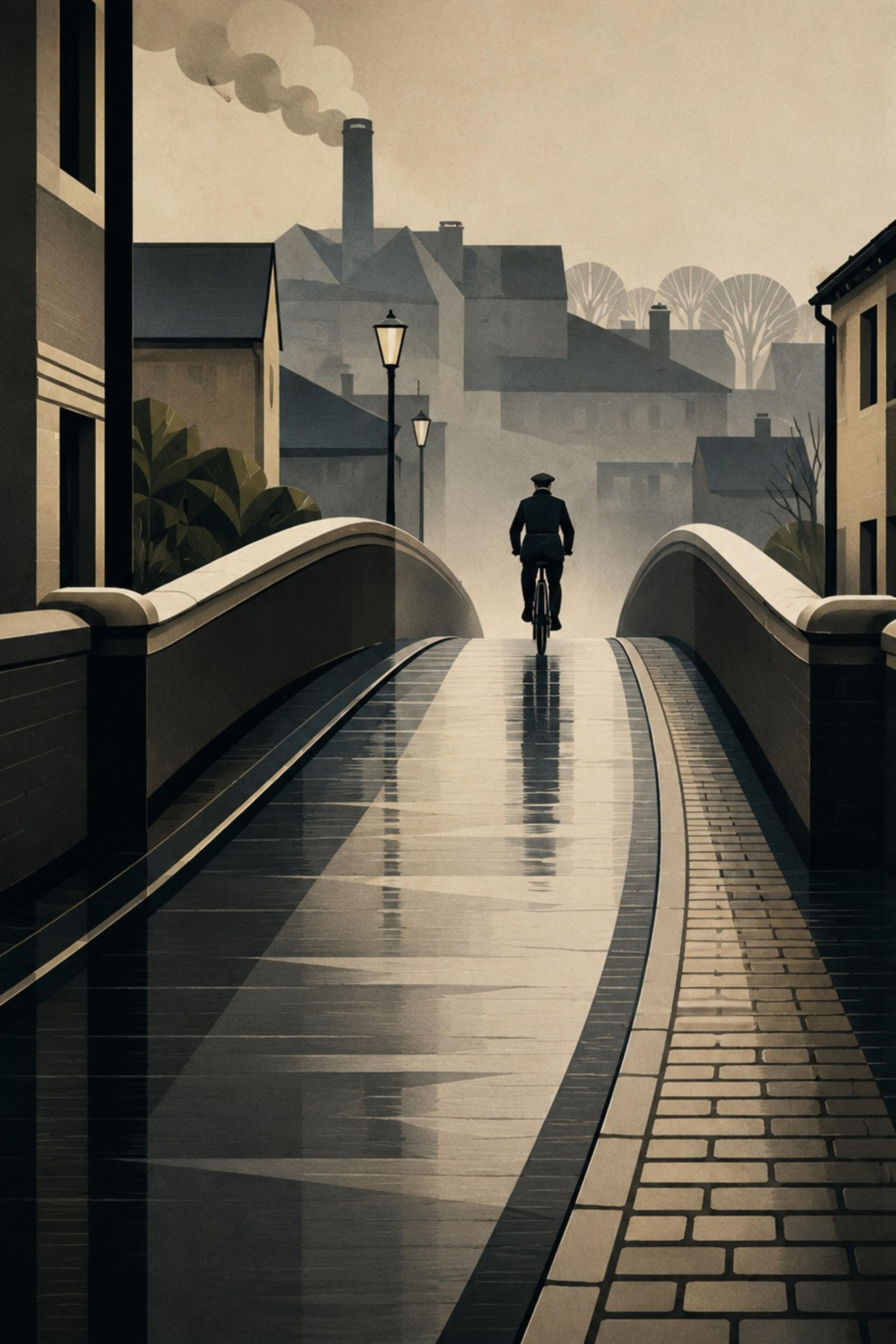
The Bridge reduces a northern industrial landscape to a carefully ordered arrangement of curves, planes and repeating forms.The bridge rises through the composition in two sweeping arcs, drawing the eye towards the solitary cyclist and the closely packed rooftops beyond.Chimneys, street lamps and bare trees are simplified into strong geometric shapes, while the wet surface creates a second, fractured version of the scene below.Rendered in muted cream, charcoal and smoke grey, the print combines the discipline of Precisionism with the atmosphere of a northern town after rain. The cyclist provides the only movement, travelling away from us towards a landscape that feels both familiar and strangely still.Available exclusively through FCSF, this artistic interpretation is available unframed on 240 gsm art paper and measures 16 x 20 inches.
What did the critics think?
The Manchester Evening Chronicle described the film as:“A stubbornly northern picture of rain, repetition and emotional distance.”While the Yorkshire Post offered perhaps the most favourable contemporary review:“Dunmore discovers an unexpected melancholy in cobbles, factory walls and the simple act of somebody continuing home.”Not all responses were sympathetic. Picturegoer dismissed the production as:“An exceptionally well-photographed endurance test.”Despite its mixed reception, The Bridge is now widely considered the defining Crimea Street Films production and the clearest example of Dunmore’s preference for atmosphere over dramatic incident. Surviving posters from the original release remain among the most sought-after material associated with the studio, particularly following renewed interest in overlooked regional British cinema during the late 1970s and early 1980s.
From the archive
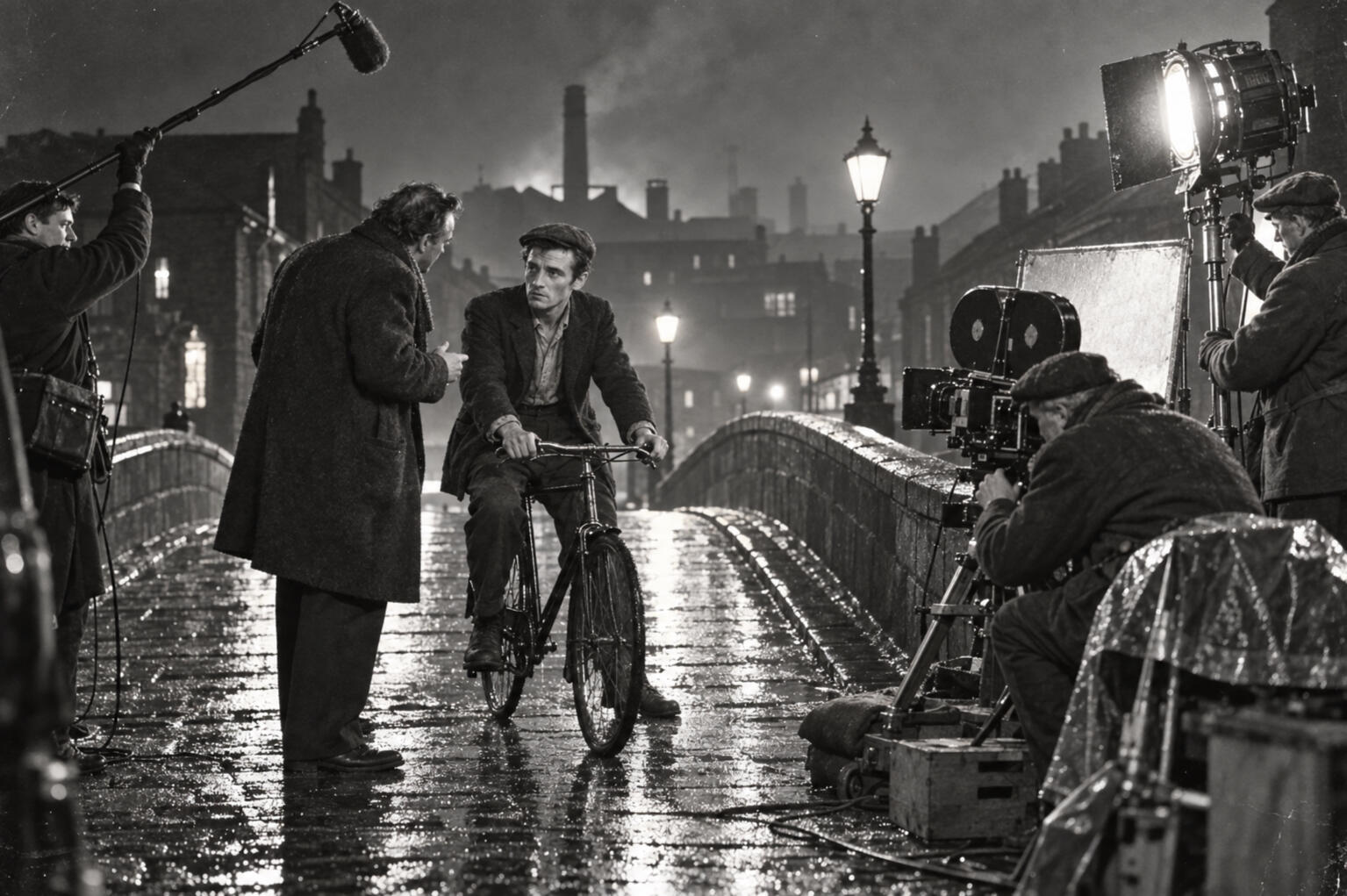
A surviving camera report records that filming was repeatedly delayed while cinematographer W. H. Mitchell waited for rainfall.When the weather remained dry, the local fire brigade was occasionally asked to soak the bridge before shooting began.
Publicity shot from the archive
The artwork of Reg Baines
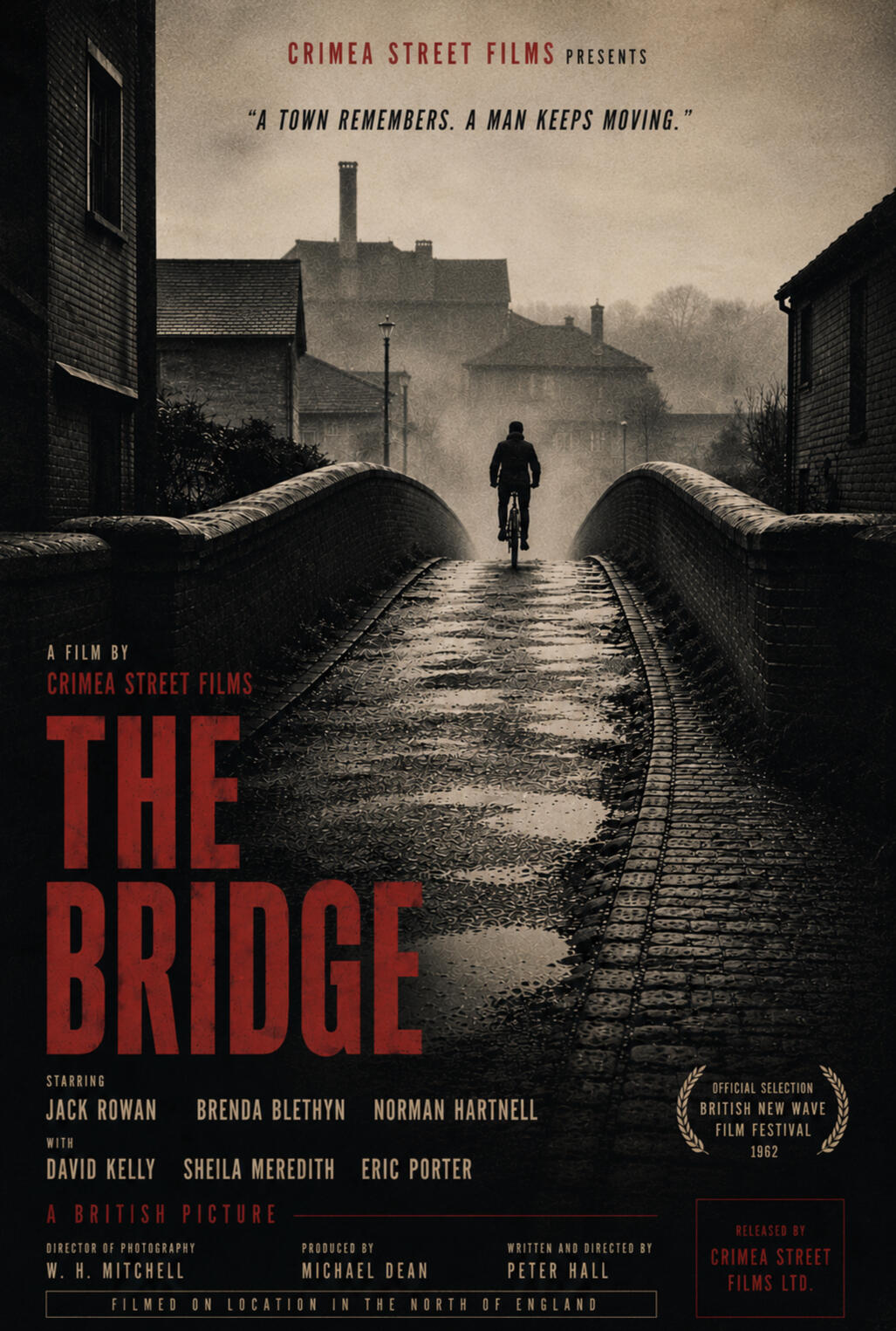
The original posters created by Reg Baines are synonymous with the studio and are very much part of its history.They would have been seen throughout the North of England outside cinemas, on hoardings and in places such as train stations.Most of them were damaged in a fire at the studio in late 1966, but we are delighted to now work with Parbold based artist, Brian Astley.He has faithfully reproduced each poster to a standard that our Reg would have been proud of and each one is available unframed on 240 gsm art paper as a 16 x 20 inch homage to the films we celebrate.